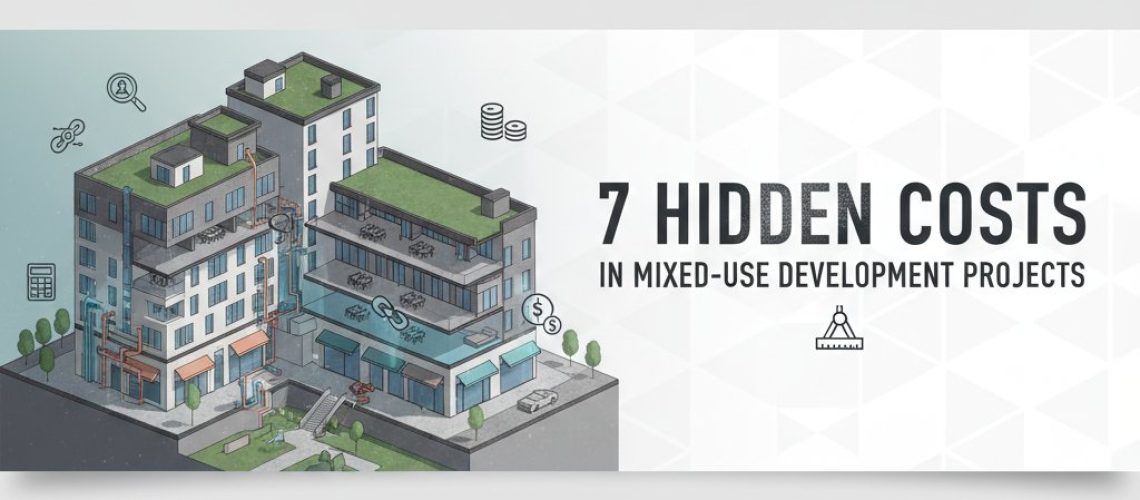
Mixed-use development projects represent one of the most dynamic opportunities in South Florida’s construction landscape. These properties combine residential, commercial, and sometimes hospitality components under one roof, creating vibrant urban spaces that serve multiple community needs. However, the complexity of these projects often leads to unexpected expenses that can derail budgets and timelines. Understanding these hidden construction expenses before breaking ground can mean the difference between a profitable venture and a financial challenge.
Across Miami-Dade, Broward, and Palm Beach Counties, developers are learning that mixed-use development costs extend far beyond the initial construction estimate. The unique nature of building projects that must satisfy multiple use cases—from ground-floor retail to luxury residential units—creates layers of complexity that demand careful planning and experienced guidance.
The True Cost of Vertical Mixed-Use Complexity
When you stack different uses vertically, you’re not simply building multiple projects on top of each other. Each use type carries distinct code requirements, mechanical systems, and structural considerations. The residential floors above require different HVAC systems than the commercial spaces below. Fire suppression systems must meet varying standards depending on use. These intersecting requirements create construction budget overruns that catch even experienced developers off guard.
One multifamily developer in Fort Lauderdale discovered this reality when their mechanical engineering costs increased by 30% midway through design. The residential units required individual climate control, while the ground-floor restaurant needed commercial-grade ventilation and grease management systems. The interface between these systems demanded custom engineering solutions that weren’t apparent in initial budgets.
1. Coordination and Communication Overhead
Mixed-use projects involve more stakeholders than traditional single-use buildings. You’re managing relationships with residential unit buyers, commercial tenants, retail operators, and possibly hotel management—all with different expectations and timelines. This complexity requires dedicated project management resources that go beyond typical construction oversight.
Development cost management in mixed-use environments means accounting for additional project management personnel, enhanced communication systems, and extended coordination meetings. These soft costs can add 5-8% to overall project expenses. The alternative—inadequate coordination—leads to conflicts, delays, and expensive rework that costs even more.
Consider building in resources for tenant coordination officers who can manage the specific needs of commercial tenants while construction continues. In South Florida’s competitive market, securing quality commercial tenants early often means accommodating their space planning needs during construction, which requires dedicated personnel to manage these moving pieces without disrupting the overall schedule.
2. Parking and Loading Infrastructure Challenges
Parking requirements for mixed-use developments create hidden expenses that multiply quickly. Residential units, retail spaces, office components, and hospitality elements each carry different parking ratios under local codes. In dense urban areas throughout Miami-Dade and Broward Counties, satisfying these requirements often means structured parking that significantly increases costs.
Structured parking typically runs between $20,000 and $35,000 per space in South Florida, depending on design complexity and soil conditions. When your project requires 200 spaces instead of the 120 initially estimated, you’re looking at an additional $1.6 million to $2.8 million expense.
Loading dock requirements present similar challenges. Residential deliveries, commercial freight, food service for restaurants, and trash removal all compete for limited loading space. Creating separate loading zones with appropriate access and scheduling systems adds both construction costs and ongoing operational complexity that must be designed into the building from day one.
3. Utility Infrastructure Upgrades and Separations
Mixed-use buildings require separate utility metering for different use types and individual tenants. This means installing multiple water, electric, and gas services within a single building. The infrastructure to support this separation—including individual meters, distribution panels, and accounting systems—represents a significant hidden construction expense.
In older urban areas where mixed-use development often occurs, existing utility infrastructure may lack capacity for your project’s combined demand. Utility companies may require developers to fund infrastructure upgrades extending beyond property lines. One developer in downtown Miami faced a $400,000 electrical transformer upgrade that wasn’t identified until permitting was underway. These off-site improvements rarely appear in preliminary budgets but become non-negotiable requirements before occupancy.
Commercial construction planning must include early utility coordination meetings with local providers. Engaging these conversations six to nine months before permit submission helps identify capacity issues and cost-sharing opportunities that prevent last-minute surprises.
4. Phasing and Partial Occupancy Costs
Mixed-use projects often require phased occupancy to generate revenue during construction. Retail tenants may demand early access to build out their spaces, or residential units might be ready before commercial components are complete. These scenarios require temporary certificates of occupancy, interim life safety systems, and construction barriers that add substantial costs.
Maintaining active construction while portions of the building are occupied demands enhanced safety protocols, restricted work hours, dust control measures, and additional insurance coverage. Security becomes more complex and expensive when you’re protecting both construction materials and occupied spaces. Budget for these phasing costs early—they typically add 3-5% to construction budgets when partial occupancy is required.
The operational coordination required during phased openings also means keeping key construction management personnel on-site longer than originally planned. These extended personnel costs, combined with the inefficiencies of working around occupied spaces, create budget pressures that compound if not anticipated.
5. Extended Permitting and Approval Timelines
Mixed-use projects face longer permitting timelines because they trigger reviews from multiple municipal departments. Building, planning, fire, health, and sometimes tourism departments all scrutinize different aspects of the project. In Palm Beach County, a mixed-use project with ground-floor restaurants might require health department approval for commercial kitchens, fire department review for occupancy loads, and planning department analysis for parking and traffic impacts.
These extended timelines carry hard costs in the form of carrying charges on land, extended professional fees for architects and engineers, and delayed revenue. A three-month permitting delay on a $25 million project can easily cost $150,000 in interest and soft costs. Mixed-use development costs must account for realistic permitting schedules that reflect the project’s complexity.
Working with a construction team that maintains strong relationships with local building departments throughout South Florida can streamline this process. Experienced partners understand which municipalities require specific documentation formats or prefer early coordination meetings that prevent delays.
6. Code Compliance at Use Transitions
The transition points between different uses within a mixed-use building trigger stringent code requirements for fire separation, sound isolation, and structural design. These interfaces require specialized construction assemblies that cost significantly more than standard building systems.
Fire-rated floor assemblies separating commercial from residential uses might require 2-hour fire ratings, special penetration seals, and upgraded sprinkler systems. Sound isolation between a ground-floor entertainment venue and residential units above demands acoustical engineering and specialized construction details that can add $50-75 per square foot at transition zones.
These assemblies must be installed with precision. Quality control at these critical interfaces becomes essential, requiring additional inspection and testing that adds both time and cost. However, investing in proper construction at these transitions prevents expensive callbacks and tenant complaints that damage reputation and revenue.
7. Market-Driven Design Changes During Construction
Mixed-use projects typically have longer development timelines than single-use buildings. Market conditions change during these extended periods, forcing design modifications to remain competitive. The luxury residential finishes that seemed appropriate when you started design might need upgrading by the time you’re building to match newer competing properties.
Commercial tenant requirements evolve as retail and restaurant concepts change. The food hall concept you initially planned might need reconfiguration when anchor tenants request different layouts. These market-driven changes during construction create some of the most significant construction budget overruns because they involve rework, redesign fees, and schedule impacts.
Building contingency specifically for market adaptation—separate from general construction contingency—provides flexibility to respond to opportunities without derailing budgets. Successful developers in South Florida’s fast-moving market typically reserve 3-5% of budget for strategic improvements identified during construction.
Protecting Your Investment Through Partnership
The complexity of mixed-use development demands more than technical construction expertise—it requires a partner who understands the financial pressures developers face and works collaboratively to prevent surprises. The most successful projects in South Florida come from relationships built on transparency, proactive communication, and shared commitment to the development’s long-term success.
Early involvement of your construction team, ideally during preconstruction or even site selection, helps identify these hidden costs before they impact budgets. Value engineering doesn’t mean cutting quality; it means making informed decisions about where to invest resources for maximum impact. An experienced construction partner brings perspective from previous mixed-use projects, helping you avoid expensive mistakes others have made.
Commercial construction planning for mixed-use developments benefits from detailed cost modeling that accounts for these seven hidden expense categories. Transparent budgeting that acknowledges complexity builds trust and creates realistic financial expectations among all project stakeholders.
Building Relationships That Last Beyond Project Completion
The best construction partnerships extend beyond a single project. When you develop mixed-use properties, you’re creating long-term assets that will serve your community for decades. Working with a team that thinks generationally—that cares about how the building performs five and ten years after completion—aligns incentives and produces better outcomes.
In South Florida’s relationship-driven business environment, reputation matters. Developers who consistently deliver quality mixed-use projects work with construction partners who share their values around quality, communication, and community impact. These relationships create competitive advantages through smoother permitting, better subcontractor pricing, and faster problem-solving when challenges arise.
If you’re planning a mixed-use development in Miami-Dade, Broward, or Palm Beach Counties, starting the conversation early makes all the difference. Understanding the true scope of development cost management before you commit to budgets and timelines positions your project for success. The complexity of mixed-use development rewards careful planning and experienced partnership—two investments that protect against the hidden costs that derail less prepared projects.
Frequently Asked Questions
What percentage should I budget for contingency on mixed-use projects?
Most experienced developers budget 10-15% contingency for mixed-use developments, higher than the 5-10% typical for single-use projects. This accounts for the additional complexity and interface challenges inherent in mixed-use construction. Consider splitting this between construction contingency and owner contingency for design changes.
How much earlier should I start planning a mixed-use project compared to a residential-only building?
Add at least six months to your planning timeline for mixed-use developments. The additional time allows for comprehensive market analysis, tenant pre-leasing efforts, utility coordination, and the more complex permitting process. This upfront investment prevents expensive delays during construction.
Can value engineering reduce mixed-use development costs without sacrificing quality?
Yes, when approached strategically. Early value engineering during design—not during construction—identifies opportunities to optimize systems, consolidate infrastructure, and select materials that deliver required performance at better prices. The key is involving experienced construction professionals during preconstruction when changes are least expensive.
What’s the biggest mistake developers make with mixed-use project budgets?
The most common mistake is applying per-square-foot costs from simpler projects to mixed-use developments. The interfaces between uses, enhanced systems requirements, and coordination complexity mean mixed-use buildings cost 15-25% more per square foot than comparable single-use properties. Starting with realistic benchmarks prevents underfunding that leads to value engineering that compromises the project.
How important is the general contractor’s mixed-use experience in South Florida specifically?
Regional experience matters significantly. South Florida’s unique conditions—hurricane requirements, coastal construction considerations, local permitting processes, and established subcontractor relationships—mean that a contractor with local mixed-use experience delivers substantial value. They understand which municipalities require specific approaches and have relationships that facilitate smoother approvals and competitive pricing.