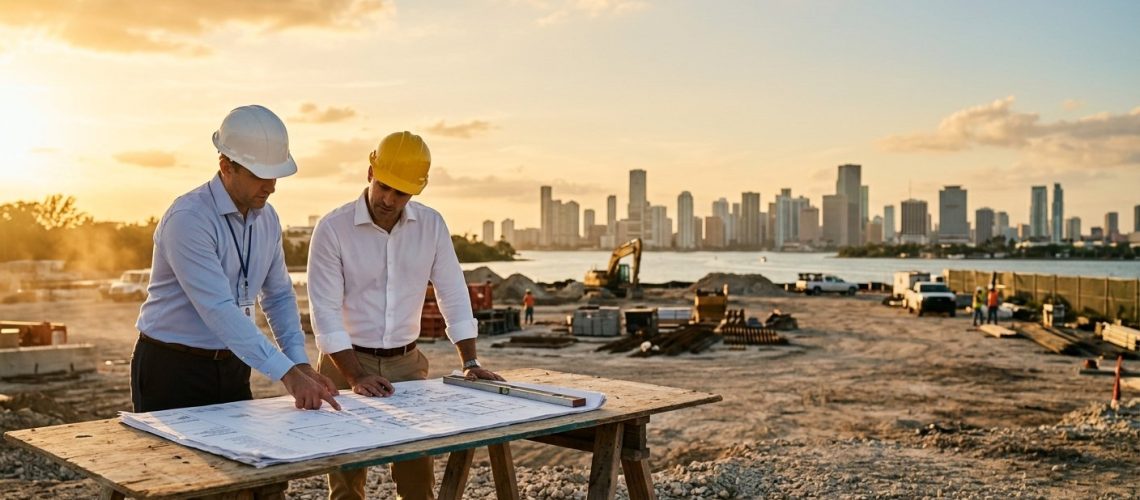
Nearly 60% of construction project overruns trace back to decisions—or missed steps—made before a single foundation is poured. For developers in Miami-Dade, Broward, and Palm Beach Counties, the pre-construction phase isn’t a formality. It’s where projects are won or lost, budgets are protected, and partnerships are forged that carry a development from concept all the way to ribbon cutting.
At Ortega’s Building & Construction, we’ve seen firsthand how the right pre-construction process transforms a complex, high-stakes development into a manageable, well-executed build. Whether you’re planning a multi-family residential community in Boca Raton, a mixed-use project in Fort Lauderdale, or a hospitality development near Miami, what you do before construction begins will define everything that follows.
This checklist is built for South Florida developers who want clarity, confidence, and a trusted partner at the table from day one.
1. Define Your Project Scope and Goals
Before anything else, you need a clear picture of what you’re building and why. This sounds obvious, but scope creep—the gradual expansion of a project beyond its original intent—is one of the most common and costly problems in commercial construction management in Florida.
Start by answering these foundational questions:
- What is the intended use of the building? (Multi-family residential, mixed-use, hospitality, or a combination?)
- Who is your target occupant or guest, and what does that audience expect?
- What are your non-negotiables in terms of quality, aesthetics, and functionality?
- What does success look like at project completion?
These answers shape every downstream decision—from architect selection to materials sourcing to subcontractor vetting. Developers who invest time here protect themselves from expensive change orders later.
2. Assemble the Right Team Early
One of the best decisions a South Florida developer can make is bringing a general contractor and construction management partner into the process before design is finalized. This is called preconstruction collaboration, and it changes the quality of outcomes dramatically.
When Ortega’s joins a project during design development, we can provide constructability reviews, real-world cost feedback, and local knowledge that architects and developers simply don’t have access to in isolation. South Florida has its own construction ecosystem—specific trade availability, regional material costs, permitting timelines that vary by municipality, and code requirements shaped by our coastal environment.
Your core pre-construction team should typically include:
- A licensed general contractor with verified regional experience
- A licensed architect and structural engineer
- A civil engineer for site work and drainage
- MEP (mechanical, electrical, plumbing) consultants
- A geotechnical engineer for soil analysis
- Your legal and financial advisors
Don’t wait until design documents are complete to engage your contractor. Early involvement saves time, money, and surprises.
3. Conduct Site Due Diligence
South Florida’s geography presents unique site conditions that require thorough investigation before design begins. High water tables, sandy or limestone-based soils, proximity to coastal flood zones, and environmental sensitivity all affect how a project is designed, permitted, and built.
Key Site Investigations to Complete
- Geotechnical report: Understand soil bearing capacity and groundwater depth before finalizing foundation design.
- Environmental assessment (Phase I and Phase II if warranted): Identify any contamination or protected species considerations.
- Flood zone determination: Verify your FEMA flood zone designation, as it affects both design requirements and insurance costs. FEMA’s Flood Map Service Center is the authoritative resource for this step.
- Utility verification: Confirm availability and capacity of water, sewer, electric, and telecom at or near the site.
- Title and survey review: Identify easements, encumbrances, or setback restrictions that affect buildable area.
Skipping or rushing any of these steps creates risk that shows up—often expensively—during construction or permitting.
4. Understand Permitting and Zoning Requirements
Permitting in South Florida can be one of the most time-sensitive elements of a development timeline. Miami-Dade, Broward, and Palm Beach Counties each have distinct permitting processes, and within those counties, individual municipalities add their own layers.
Key steps in this phase include:
- Confirming current zoning allows your intended use (and pursuing variances or rezoning if needed)
- Reviewing applicable building codes, including Florida Building Code requirements for wind resistance and hurricane mitigation
- Identifying all required permits: building, site plan approval, environmental, stormwater, and any special-use permits
- Understanding the timeline for each permit type in your specific jurisdiction
- Meeting with local planning and building departments early to surface issues before design is finalized
The Florida Building Commission provides the current version of the Florida Building Code, which governs construction standards across the state and is particularly relevant for South Florida’s coastal exposure requirements.
A South Florida general contractor with deep local relationships can often help navigate permitting more efficiently than working through the process cold. This is one of the practical advantages of partnering with a team that has more than 10 years of hands-on South Florida construction experience.
5. Develop a Realistic Budget and Contingency Plan
Budget development in the pre-construction phase requires honesty, detail, and experience. A reliable preliminary estimate accounts for hard costs (construction), soft costs (design, permitting, legal, financing), land acquisition if applicable, and a realistic contingency.
In South Florida’s current market, contingency planning is especially important. Material costs and labor markets have stabilized from their post-pandemic peaks, but supply chains for specialty items—custom glazing, elevator equipment, MEP systems—still require lead time planning.
Work with your construction management partner to develop:
- A detailed preliminary cost estimate broken down by trade
- A value engineering session to identify cost-saving opportunities without sacrificing quality
- A contingency budget (typically 5–15% depending on project complexity and design completeness)
- A clear understanding of what triggers change orders and how they’ll be managed
Transparency in budgeting is a core value at Ortega’s. We believe developers make better decisions when they have accurate information, even when the numbers require some recalibration of expectations.
6. Establish a Construction Schedule and Phasing Plan
A well-structured construction schedule is more than a project management tool—it’s a communication instrument that aligns owners, architects, contractors, lenders, and future tenants or guests around shared expectations.
Your pre-construction schedule should map out:
- Design and permitting milestones
- Procurement lead times for long-lead items (order these early)
- Construction phasing, especially for occupied sites or phased developments
- Inspections and required testing milestones
- Substantial completion and certificate of occupancy targets
For multi-family and mixed-use developments, phasing strategy can directly affect your financing draws and lease-up timeline. A construction management partner experienced in multi-family construction understands how to sequence work to protect those critical milestones.
7. Plan for Safety, Quality Control, and Communication
Professional project execution requires documented systems—not assumptions. Before construction begins, your team should have established:
- A site-specific safety plan that meets OSHA standards and Florida requirements
- A quality control and inspection plan outlining hold points and third-party testing
- A communication protocol with defined reporting cadence and chain of contact
- A submittal and RFI process to manage information flow between design and construction teams
According to OSHA’s construction safety guidelines, proactive safety planning is one of the most effective ways to prevent delays, injuries, and liability on active job sites. For Ortega’s, safety isn’t just compliance—it’s how we take care of the people who build these communities.
If your project has a hospitality component, the pre-construction phase is also the right time to align on brand standards, guest experience details, and FF&E coordination. Our team’s experience in hospitality construction means we know how these details translate into construction requirements that need to be captured early.
Frequently Asked Questions
How long does the pre-construction phase typically take in South Florida?
Timelines vary based on project size and complexity, but most commercial and multi-family projects in South Florida require three to nine months of pre-construction work. This includes design development, permitting, site investigation, and procurement planning. Rushing this phase rarely saves time overall—it typically creates delays during construction.
When should a developer hire a general contractor?
Ideally, during or before the design development phase. Bringing a general contractor in early allows for constructability reviews, budget feedback, and local market input that improves both design quality and cost accuracy. Early engagement is one of the most impactful decisions a South Florida developer can make.
What makes pre-construction in South Florida different from other markets?
South Florida has unique variables including hurricane-resistant building code requirements, high water table conditions, coastal flood zone regulations, and permitting processes that vary significantly by municipality across Miami-Dade, Broward, and Palm Beach Counties. Local expertise is essential, not optional.
What is value engineering, and should developers be concerned about it?
Value engineering is the process of reviewing design elements to find cost-efficient alternatives that maintain or improve function and quality. When done honestly and collaboratively, it’s a valuable tool. Developers should look for contractors who approach value engineering transparently and never sacrifice quality without a clear understanding of the trade-offs.
How do I evaluate a general contractor during pre-construction?
Look for demonstrated experience with similar project types, local references from Miami-Dade, Broward, or Palm Beach Counties, licensing and insurance verification, and a communication style that reflects genuine partnership. A contractor who asks good questions early and provides honest cost feedback is a strong signal of how they’ll perform throughout the project.
Ready to Build with a Partner Who’s Invested in Your Success?
Pre-construction isn’t paperwork—it’s partnership. The developers who get the best outcomes in South Florida are those who treat the pre-construction phase as seriously as construction itself, and who surround themselves with experienced, transparent, relationship-driven partners.
At Ortega’s Building & Construction, we bring more than 10 years of hands-on South Florida construction experience to every project we touch. We serve developers, architects, and property owners across Boca Raton, Miami, Fort Lauderdale, and West Palm Beach—and we approach every engagement with a stakeholder mentality. Your success is our success.
Learn more about our approach to commercial construction management, or reach out directly to start a conversation about your next development. We’d love to be at the table with you from the very beginning.