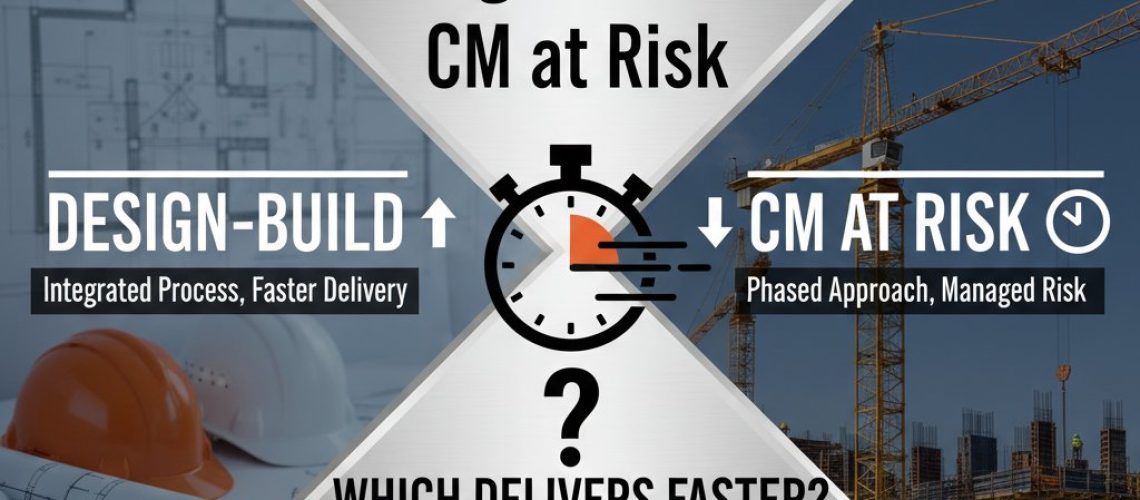
Speed matters in South Florida construction. When you’re racing to capture market opportunities in Miami-Dade, Broward, or Palm Beach Counties, choosing the right project delivery method can mean the difference between capitalizing on demand or missing your window entirely. Two delivery methods dominate commercial construction conversations today: design-build construction and construction manager at risk. Both promise efficiency, but which one actually gets your multi-family or hospitality project completed faster?
The answer isn’t as simple as picking the method with the shortest timeline on paper. Real speed in construction comes from eliminating delays, reducing conflicts, and maintaining momentum from groundbreaking to certificate of occupancy. Let’s examine how these two popular project delivery methods stack up when time is your most valuable resource.
Understanding Project Delivery Methods in Commercial Construction
Before comparing speed, it’s essential to understand what distinguishes these approaches. The commercial construction process fundamentally changes based on who leads the project, when they’re involved, and how responsibilities are allocated.
What Is Design-Build Construction?
Design-build construction consolidates design and construction services under one contract and one team. Your developer organization works with a single entity responsible for both architectural design and construction execution. This unified approach creates a streamlined chain of command where the design-build team coordinates architects, engineers, and construction professionals from day one.
The process typically flows like this:
- You engage a design-build contractor early in the planning phase
- Design and preconstruction happen simultaneously
- Construction begins before final designs are 100% complete
- One contract covers the entire project scope
- A single point of accountability exists for outcomes
In South Florida’s competitive development landscape, design-build has gained significant traction for multi-family projects where speed to market directly impacts profitability.
What Is Construction Manager at Risk?
The construction manager at risk (CMAR or CM at Risk) delivery method positions a construction manager as both advisor and contractor. During the design phase, the CM provides cost estimating, scheduling input, and constructability reviews. Once design reaches a certain completion level, the CM converts to a general contractor role and assumes financial responsibility for delivering the project at a guaranteed maximum price (GMP).
Here’s how this construction management comparison typically unfolds:
- Owner hires an architect or design team separately
- Construction manager joins during design development
- CM provides preconstruction services and cost guidance
- Design completes to a higher percentage before construction starts
- CM transitions to contractor role with a GMP contract
This method appeals to developers who want construction expertise influencing design decisions while maintaining separate contracts and traditional architect-owner relationships.
Speed Factors: Where Design-Build Pulls Ahead
When developers ask which delivery method is faster, design-build construction typically wins the race. Several structural advantages create inherent schedule compression.
Overlapping Phases Eliminate Sequential Delays
Traditional project delivery follows a linear path: complete design, bid the project, then start construction. CM at Risk improves on this somewhat, but design-build transforms it entirely. With design-build, construction activities begin while design continues. Foundation work might start based on conceptual designs while the team finalizes upper-floor details.
For a mixed-use project in downtown Fort Lauderdale, this overlap could save three to six months compared to a fully sequential approach. In markets where rental rates rise quarterly and buyer demand shifts rapidly, those months represent substantial financial value.
Unified Team Communication Speeds Decisions
Speed isn’t just about activity—it’s about decision velocity. Design-build creates a unified team where designers and builders solve problems together daily. When questions arise about material availability, code requirements, or site conditions, resolution happens in a single conversation among teammates rather than formal RFIs bouncing between separate contracts.
This collaborative environment dramatically reduces the delays that plague traditionally delivered projects. Instead of waiting days or weeks for the architect to respond to a contractor’s question, then waiting again for the owner’s approval, design-build teams resolve issues in real-time.
Fewer Change Orders Mean Fewer Schedule Disruptions
Change orders represent the silent schedule killer in construction. Each change triggers re-estimating, approval processes, and coordination adjustments. Design-build construction substantially reduces change orders because constructability gets baked into design from the beginning.
When your concrete subcontractor sits alongside your structural engineer during design development, impractical details get eliminated before they’re documented. The design that emerges is inherently more buildable, requiring fewer mid-construction corrections.
When CM at Risk Offers Strategic Advantages
Despite design-build’s speed advantages, construction manager at risk delivers value in specific circumstances that might actually improve your overall project timeline when viewed holistically.
Complex Regulatory Environments Benefit from Design Completion
South Florida development involves navigating complex regulatory landscapes—especially in coastal areas with FEMA requirements, historic districts, or municipalities with rigorous design review boards. Palm Beach architectural review boards, for instance, demand detailed submissions before approval.
CM at Risk allows design to reach higher completion levels before construction commitments. For projects requiring extensive public approvals, this reduces the risk of costly rework when regulatory feedback arrives mid-construction. While this might add weeks to the front end, it prevents months of disruption later.
Owner Control and Design Flexibility
Some developers prioritize maintaining direct relationships with their architectural teams. Perhaps you’re working with a signature architect whose vision defines your brand, or you’re developing a hospitality project where design details directly impact operational success.
CM at Risk preserves this owner-architect relationship while still bringing construction expertise to the table early. The construction manager reviews designs and provides cost feedback without taking over the creative process. This balance sometimes prevents the false starts and major redesigns that ultimately delay projects more than any delivery method saves.
Budget Certainty Before Construction Commitments
The CM at Risk guaranteed maximum price arrives after design reaches substantial completion—typically 80-90%. This timing provides more cost certainty than design-build’s progressive pricing approach. For developers with strict financing requirements or board approval processes, this certainty enables faster financial approvals.
If securing your construction loan depends on presenting a fixed-price contract to lenders, the few weeks you might lose in scheduling could be offset by weeks gained in financing approval.
The Real Speed Factor: Relationship and Trust
Here’s what two decades of South Florida construction teaches: delivery method matters less than delivery team. The fastest projects aren’t necessarily design-build or CM at Risk—they’re projects where developers partner with construction teams they trust completely.
When trust exists, design-build’s advantages multiply. Developers comfortable with early construction commitments based on conceptual designs unlock maximum schedule compression. Without trust, that same developer might delay approvals, second-guess decisions, and eliminate the speed advantages entirely.
Similarly, CM at Risk succeeds when the construction manager genuinely functions as the owner’s advocate during design, providing honest cost feedback even when it’s uncomfortable. A CM more focused on winning the GMP contract than providing candid preconstruction advice squanders the method’s collaborative potential.
For multi-family developers in markets like Brickell or West Palm Beach, choosing a construction partner feels like selecting a family member for a multi-year journey. That relationship determines whether your delivery method’s theoretical advantages translate into real-world schedule performance.
South Florida Market Considerations
Our regional market dynamics influence which delivery method serves you best. South Florida presents unique challenges that impact project speed regardless of contractual structure.
Material delivery timelines remain extended compared to pre-2020 norms, particularly for specialty items like impact-resistant glazing, elevator systems, and high-end finishes common in luxury residential towers. Design-build teams can begin procurement earlier, but only if design details are locked. CM at Risk might better accommodate developers who need flexibility to adjust finishes based on market feedback during construction.
Labor availability fluctuates significantly across Miami-Dade, Broward, and Palm Beach Counties. Skilled trade contractors often book months in advance. Both delivery methods benefit from early trade partner engagement, but design-build’s unified contracting sometimes provides preferential access to the best subcontractors through established relationships.
Hurricane season planning affects every South Florida project. Experienced construction teams build weather contingencies into schedules regardless of delivery method, but design-build’s flexibility often enables faster recovery from weather delays through real-time design adjustments.
Making Your Decision: A Framework for Developers
Choose design-build construction when:
- Schedule compression is your top priority
- You trust your construction partner’s design coordination abilities
- Your project type is relatively straightforward (multi-family residential, select-service hospitality)
- Regulatory approvals are predictable in your jurisdiction
- You value single-point accountability
Consider construction manager at risk when:
- You’re navigating complex regulatory approval processes
- Maintaining your independent architect relationship is essential
- Your financing structure requires detailed cost certainty before construction begins
- Project complexity demands extensive design development before field commitments
- You want construction input during design while preserving traditional project roles
Beyond Speed: Quality, Value, and Relationships
Fastest doesn’t always mean best. A rushed project that compromises quality, exceeds budget, or damages relationships costs far more than a few extra months on the schedule.
The most successful South Florida developers think generationally. They build projects that enhance communities, create lasting value, and establish reputations that make the next development easier to finance, permit, and execute. Both design-build and CM at Risk support these goals when implemented by teams who prioritize relationships over transactions.
Speed matters, but sustainable speed—the kind that maintains quality, respects budgets, and preserves partnerships—matters more. The delivery method that helps you achieve that balance is the right choice for your project.
Frequently Asked Questions
How much faster is design-build than CM at Risk?
Design-build construction typically reduces overall project timelines by 15-30% compared to CM at Risk, primarily through overlapping design and construction phases. For a typical 200-unit multi-family project in South Florida, this might translate to 3-6 months of schedule compression. However, actual time savings depend on project complexity, team experience, and how effectively the owner makes timely decisions.
Does design-build cost more than construction manager at risk?
Design-build and CM at Risk costs are generally comparable when delivered by qualified teams. Design-build can reduce overall project costs through fewer change orders, earlier value engineering, and reduced design conflicts. CM at Risk provides more detailed cost certainty earlier in the process. Neither method inherently costs more—project costs depend primarily on scope, quality expectations, market conditions, and team efficiency.
Can I switch delivery methods mid-project?
Switching project delivery methods after contracts are signed is extremely difficult and typically inadvisable. The contractual structure, team relationships, and risk allocation differ fundamentally between methods. If your project isn’t performing as expected, addressing team performance or process issues within your existing delivery method usually proves more effective than attempting a mid-stream conversion.
Which delivery method works best for South Florida multi-family projects?
Design-build construction has become increasingly popular for multi-family residential projects in Miami-Dade, Broward, and Palm Beach Counties due to schedule advantages and market timing sensitivity. However, luxury high-rise projects with complex designs or buildings in historically sensitive areas sometimes benefit from CM at Risk’s approach. Your specific project location, target market, financing structure, and timeline priorities should guide your decision.
How do I choose between design-build contractors and construction managers?
Start by evaluating their experience with your specific project type in South Florida markets. Request references from developers with similar projects and verify their track record for on-time, on-budget delivery. Assess their preconstruction capabilities, trade partner relationships, and how they handle challenges. Most importantly, evaluate the relationship fit—choose a team you can trust through inevitable project challenges, regardless of contractual delivery method.
Partner with a Team That Delivers
Choosing between design-build construction and construction manager at risk represents just the first step in your development journey. The partner you select to execute that delivery method determines whether your project achieves its full potential.
South Florida’s construction market rewards developers who think strategically about delivery methods, but it celebrates those who build genuine partnerships with their construction teams. Whether you choose design-build’s integrated approach or CM at Risk’s collaborative structure, success comes from working with professionals who understand your goals, respect your timeline, and treat your project like their own.
Ready to discuss which project delivery method best serves your upcoming development? Let’s have a conversation about your specific goals, timeline, and how the right approach can help you capture South Florida’s market opportunities while building something that makes the community stronger.