
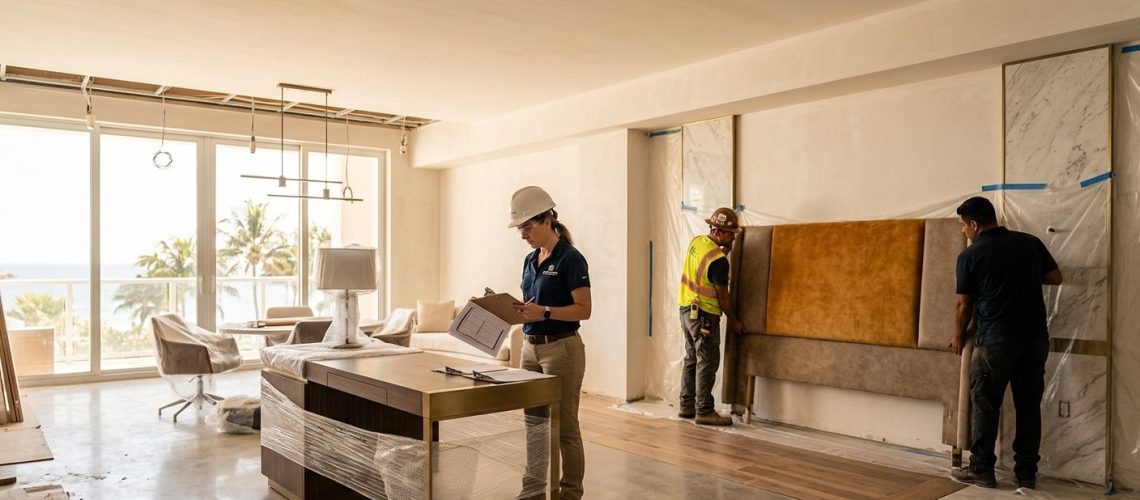
FF&E coordination—the planning, procurement, and installation of Furniture, Fixtures, and Equipment—is one of the most complex and schedule-sensitive phases of any hotel construction project. When mismanaged, it delays openings, inflates budgets, and creates friction between vendors and trades. When handled well by an experienced construction management partner, it becomes a seamless transition from structure to a fully operational, guest-ready property.
- FF&E coordination must begin during design, not after construction—late integration is the leading cause of hotel opening delays.
- A strong general contractor serves as the bridge between architects, interior designers, FF&E vendors, and trade subcontractors.
- South Florida’s hospitality market demands materials and finishes suited to the coastal environment, creating unique FF&E sourcing challenges.
- Proper MEP rough-in coordination with FF&E specs prevents costly rework during installation phases.
- Selecting a contractor with hospitality construction experience in Miami-Dade, Broward, and Palm Beach Counties makes a measurable difference in project outcomes.
Why FF&E Is More Than Furniture Shopping
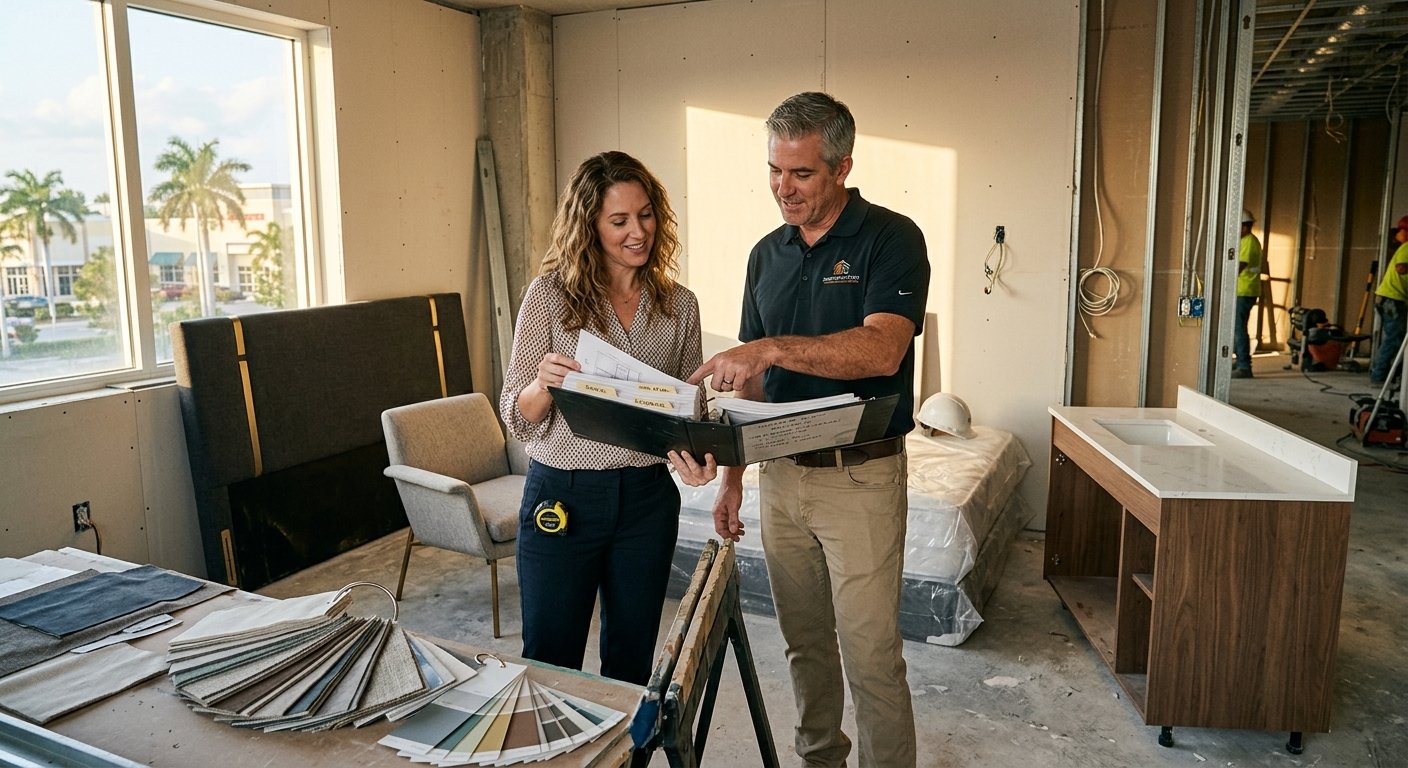
Many developers new to hospitality projects assume FF&E is something that gets handled at the end—once the walls are up and the floors are done. That assumption is one of the most expensive mistakes in hotel development. Furniture, Fixtures, and Equipment encompasses everything from guestroom beds and lobby seating to lighting systems, bathroom vanities, artwork, televisions, mini-refrigerators, and custom millwork. Each of these items has lead times, installation requirements, and spatial dependencies that directly affect construction sequencing.
In South Florida’s active hospitality market, where demand for boutique hotels, resort-style properties, and mixed-use developments continues to grow across Miami-Dade, Broward, and Palm Beach Counties, the margin for error is thin. Opening a hotel even a few weeks late means lost revenue during peak season—and in a market as competitive as South Florida, that matters.
FF&E coordination is not a procurement exercise—it’s a construction management discipline. The general contractor must be involved in FF&E planning from the schematic design phase to ensure that structural, MEP, and finish work aligns with what’s being specified and ordered by the interior design team.
The Role of the General Contractor in FF&E Coordination
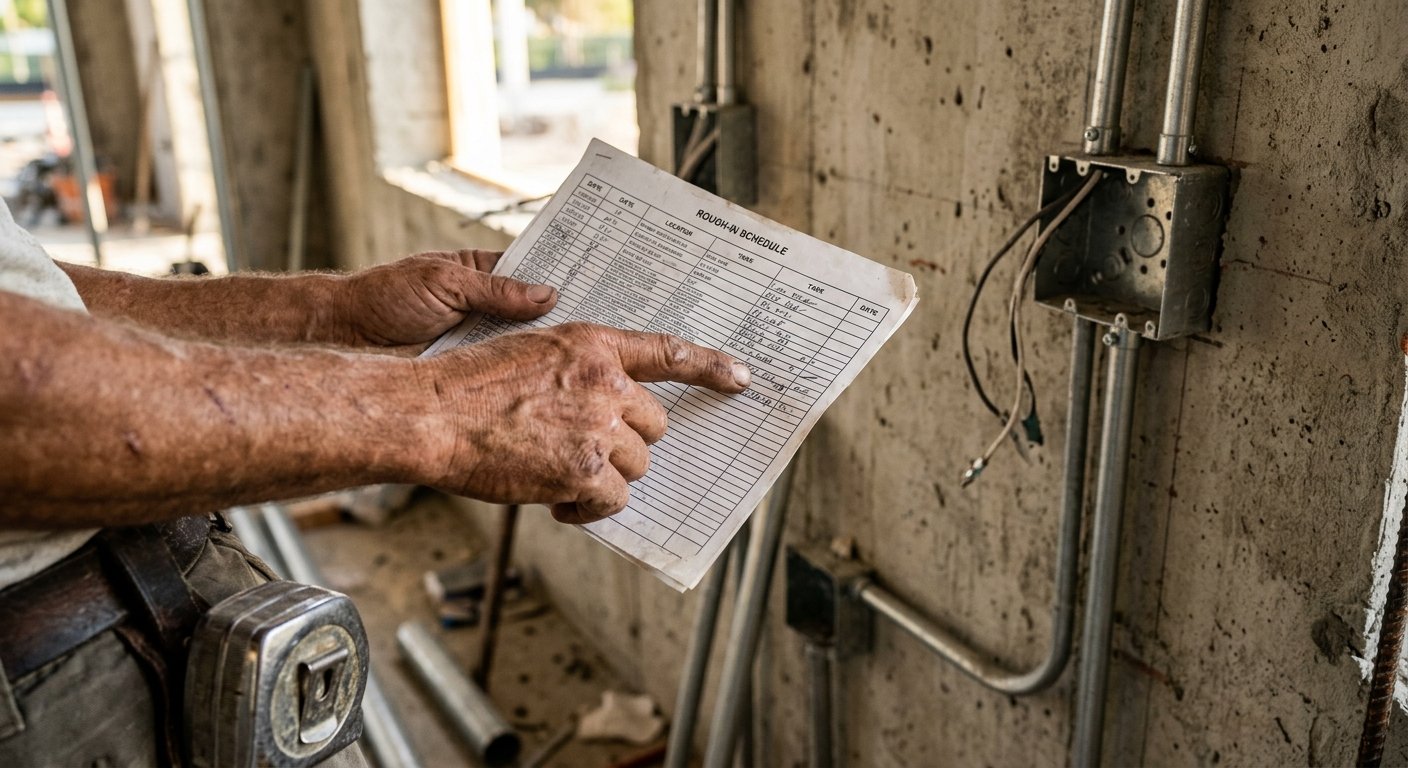
The general contractor sits at the center of the FF&E coordination process, whether or not they’re directly responsible for procurement. Even when an Owner’s Representative or interior design firm leads FF&E purchasing, the GC is responsible for ensuring that the building itself is ready to receive those items—on time, in the right sequence, with the right rough-in infrastructure in place.
At Ortega’s Building & Construction, our approach to hospitality construction treats FF&E planning as a core part of preconstruction, not an afterthought. That means our project managers review FF&E specifications alongside MEP drawings, confirm electrical and data rough-in locations match specified fixtures, and build installation windows into the master schedule with adequate buffer for shipping delays and vendor coordination.
Key GC Responsibilities in FF&E Coordination
- Preconstruction review of FF&E specs to identify conflicts with structural or MEP plans
- Scheduling FF&E delivery windows that align with completed, clean spaces—not active construction zones
- Coordinating access logistics for large or custom pieces that require freight elevators, temporary openings, or crane lifts
- Managing punch-list alignment between base building work and FF&E installation contractor responsibilities
- Protecting completed finishes during installation through active jobsite protocols
The general contractor who treats FF&E as someone else’s problem will always create someone else’s delay.
South Florida-Specific Challenges in Hospitality FF&E
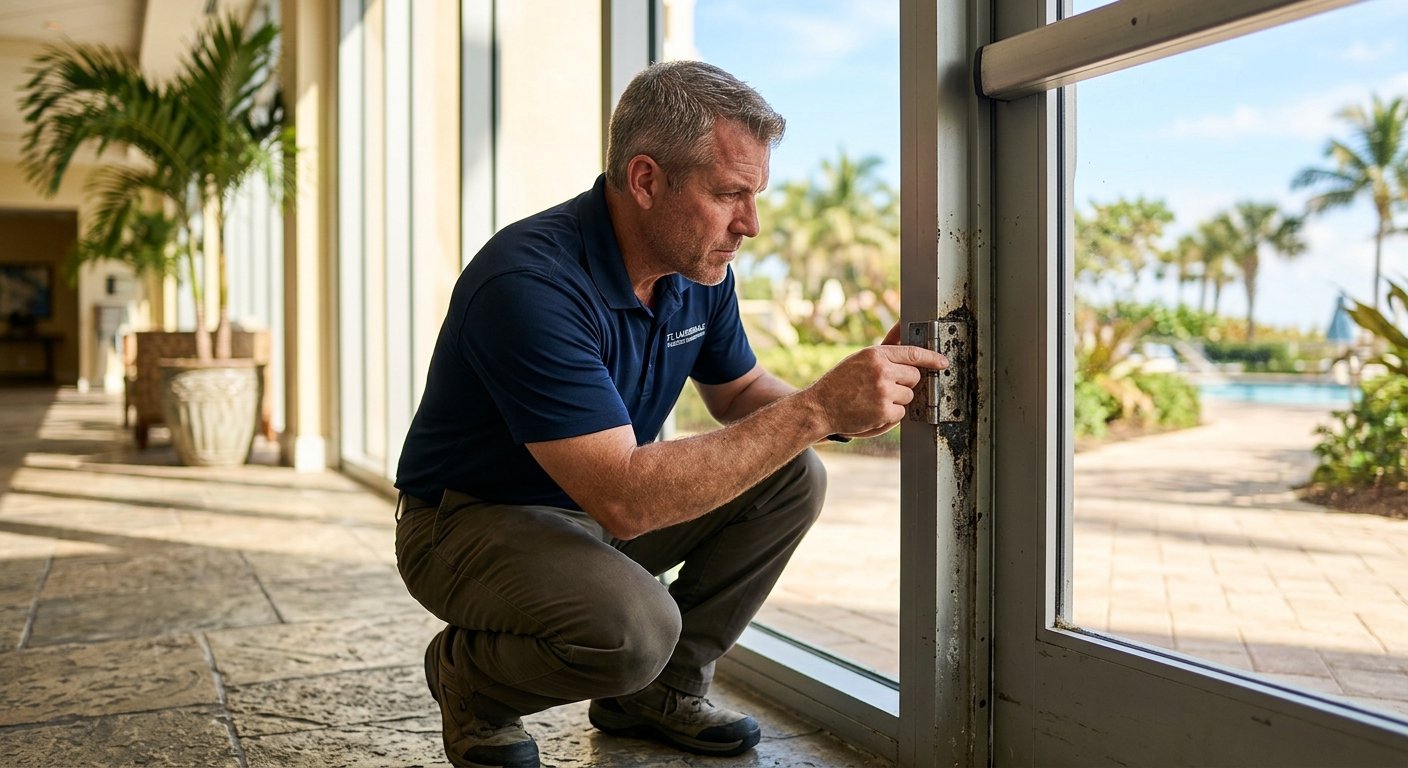
Hotel construction in South Florida comes with regional factors that make FF&E coordination more demanding than in inland markets. The coastal environment means that certain materials—upholstery fabrics, metal hardware, wood finishes—must be specified with humidity, salt air, and UV exposure in mind. A beautiful custom reception desk that wasn’t specified for coastal conditions can show premature wear within the first year of operation, leading to costly replacements and brand-image damage.
Additionally, South Florida’s port logistics through PortMiami and Port Everglades mean that international FF&E shipments—common in luxury hotel projects—move through local customs and warehousing before reaching the jobsite. Understanding this supply chain, building relationships with local warehousing partners, and planning for customs delays is part of what separates experienced local hotel development contractors from those parachuting in from other markets.
Phasing FF&E Installation Into the Construction Schedule
A well-phased hospitality project creates clean installation windows—periods during which specific areas of the hotel are complete enough to receive FF&E without risk of damage, but coordinated closely enough that final punchlist items and FF&E installation don’t overlap unnecessarily.
Preconstruction FF&E Review
The GC, design team, and owner review FF&E specifications alongside construction drawings to identify rough-in requirements, spatial conflicts, and long-lead procurement items requiring early ordering.
Long-Lead Item Identification
Custom millwork, imported furniture, and specialized lighting can carry 16–24 week lead times. These are flagged and ordered during early construction phases to avoid schedule compression later.
Warehouse & Staging Coordination
FF&E arriving before the building is ready must be warehoused locally. The GC coordinates with the owner’s FF&E manager to arrange staged delivery aligned with space readiness.
Zone-by-Zone Installation
Rather than flooding the building with FF&E at once, installation is phased by floor or zone. This protects completed work and allows for systematic inspection and punchlist management.
Punchlist & Final Inspection
A joint walkthrough with the owner, design team, and FF&E vendors identifies any damaged, missing, or non-conforming items before the certificate of occupancy and handover.
Selecting the Right Construction Management Partner
Not every general contractor has the operational depth to manage hospitality FF&E coordination effectively. It requires experience with the specific sequencing of hotel construction, relationships with South Florida’s trade community, and a project management culture that’s proactive rather than reactive.
Our commercial construction management approach at Ortega’s is built on those principles. We don’t just manage the building—we manage the relationships, the timelines, and the communication flows that keep every stakeholder aligned. That means regular owner updates, transparent scheduling, and a team that treats your project with the same care a family business brings to its own reputation.
Ask any prospective GC how they handled an FF&E delivery conflict on a previous hotel project. Their answer will tell you more about their capabilities than any brochure. Experienced hospitality contractors have stories—and lessons learned—from navigating exactly these situations.
According to the American Hotel & Lodging Association, the pace of hotel development and renovation in the U.S. continues to accelerate, placing even greater demands on construction teams to deliver on tighter timelines without compromising quality. In South Florida, where tourism and travel remain economic pillars, the stakes for hotel developers are particularly high.
| Coordination Factor | Without GC Involvement | With GC-Led Coordination |
|---|---|---|
| Rough-in alignment | Discovered conflicts during installation | Resolved in preconstruction review |
| Delivery timing | Items arrive to active construction zones | Staged to match zone readiness |
| Vendor communication | Siloed between designer and vendors | Centralized through GC’s schedule |
| Damage risk | High—no finish protection protocols | Managed through active site controls |
| Opening timeline | Often delayed due to late-stage conflicts | Protected through phased sequencing |
Frequently Asked Questions
When should FF&E planning start in a hotel construction project?
FF&E planning should begin during the schematic design phase, well before construction starts. Long-lead items like custom furniture, imported fixtures, and specialty millwork can have lead times of 16–24 weeks or more. Starting late almost always compresses the installation schedule and risks delaying the hotel’s opening.
What’s the difference between FF&E and OS&E in hotel projects?
FF&E (Furniture, Fixtures & Equipment) refers to items that are not permanently attached to the building—guestroom beds, lobby seating, artwork, and lighting. OS&E (Operating Supplies & Equipment) covers operational items like linens, kitchenware, and housekeeping supplies. Both need to be coordinated for a hotel opening, but FF&E has greater integration with the construction schedule and building infrastructure.
How does a general contractor coordinate FF&E if they didn’t procure it?
Even when FF&E procurement is managed by an owner’s rep or designer, the GC is responsible for ensuring the building is ready to receive it. This includes confirming MEP rough-in locations match specified fixtures, scheduling delivery windows, coordinating access logistics, and protecting completed finishes during installation. Communication between the GC, procurement team, and vendors is essential.
What South Florida-specific factors affect FF&E selection for hotels?
South Florida’s coastal environment—humidity, salt air, and intense UV exposure—requires careful specification of materials that can withstand these conditions. Upholstery, metal hardware, and wood finishes must be rated or treated for coastal use. Additionally, international shipments arrive through PortMiami and Port Everglades, requiring coordination with local warehousing and customs timelines.
How do I evaluate a contractor’s experience with hospitality FF&E coordination?
Ask for specific examples of hotel projects they’ve managed, including how they handled FF&E scheduling conflicts or late deliveries. Look for contractors with dedicated project management staff experienced in hospitality sequencing. A contractor with a track record of completed hotel projects in Miami-Dade, Broward, or Palm Beach Counties will bring relevant local market knowledge that makes a real difference.
Building More Than Hotels—Building Lasting Partnerships
At Ortega’s Building & Construction, we understand that a hotel project isn’t just a construction milestone—it’s the beginning of a property that will serve guests, generate revenue, and represent your brand for decades. More than 10 years of locally owned work in South Florida, backed by 60+ years of combined family legacy in construction, gives us deep roots in this market, established relationships with local trades and vendors, and a genuine commitment to delivering projects that stand the test of time.
Whether you’re developing a boutique hotel in Fort Lauderdale, a resort property in Boca Raton, or a mixed-use hospitality project in Miami, our team brings the same family-first attention to every stakeholder, every phase, and every detail—including the coordination that turns a finished building into a truly guest-ready destination. Explore our hospitality construction services to learn more about how we approach hotel development from the ground up.
Ready to Talk About Your Hotel Project?
Connect with the Ortega’s team to discuss how we can support your FF&E coordination and hospitality construction management needs across South Florida.
About Ortega's Building & Construction
Ortega's Building & Construction is a family-oriented general contractor and construction management firm serving South Florida developers, property owners, and architects. Specializing in multi-family residential, mixed-use, and hospitality projects across Miami-Dade, Broward, and Palm Beach Counties, Ortega's emphasizes relationship-building, long-term quality, and a stakeholder mentality. Locally owned and trusted in South Florida for more than 10 years, the company delivers on-time projects with personal attention, integrity, and a commitment to building communities that last for generations. Visit ortegagc.com →