
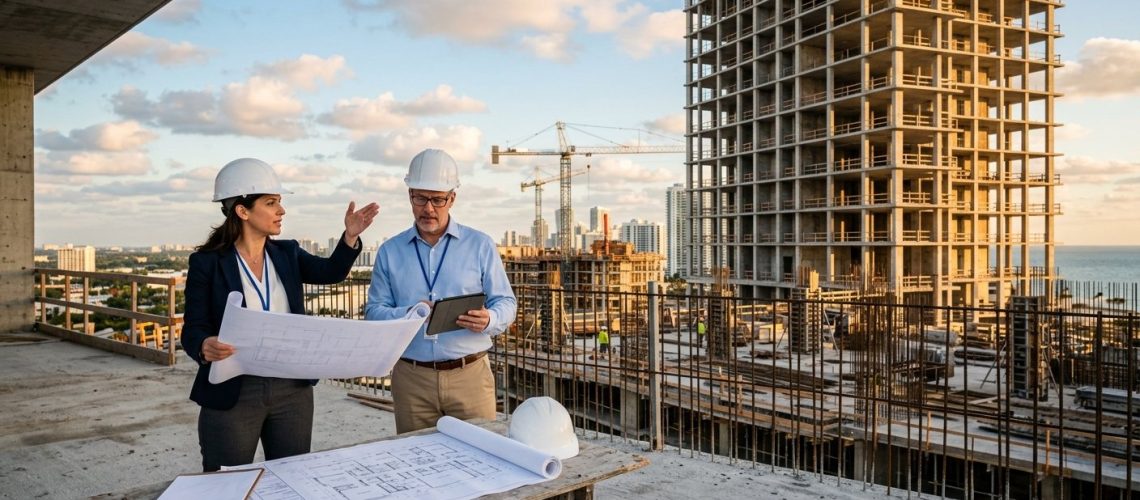
An owner’s representative advocates solely for the developer’s interests, acting as an extension of your team to oversee decisions, contracts, and communications. A construction manager, by contrast, actively directs the build itself — coordinating schedules, trade partners, budgets, and quality control on the ground. South Florida developers planning multi-family, mixed-use, or hospitality projects need to understand which role fits their project before breaking ground.
- An owner’s rep protects your interests at the decision-making level; a construction manager executes the project on your behalf.
- Many South Florida developers benefit from a single firm that combines both functions under one trusted relationship.
- The right choice depends on your internal capacity, project complexity, and how hands-on you want to be.
- Misunderstanding these roles can lead to costly gaps in oversight, duplicated effort, or misaligned accountability.
- For multi-family, mixed-use, and hospitality projects in Miami-Dade, Broward, and Palm Beach Counties, local market knowledge matters as much as process expertise.
Why This Distinction Matters More Than You Think
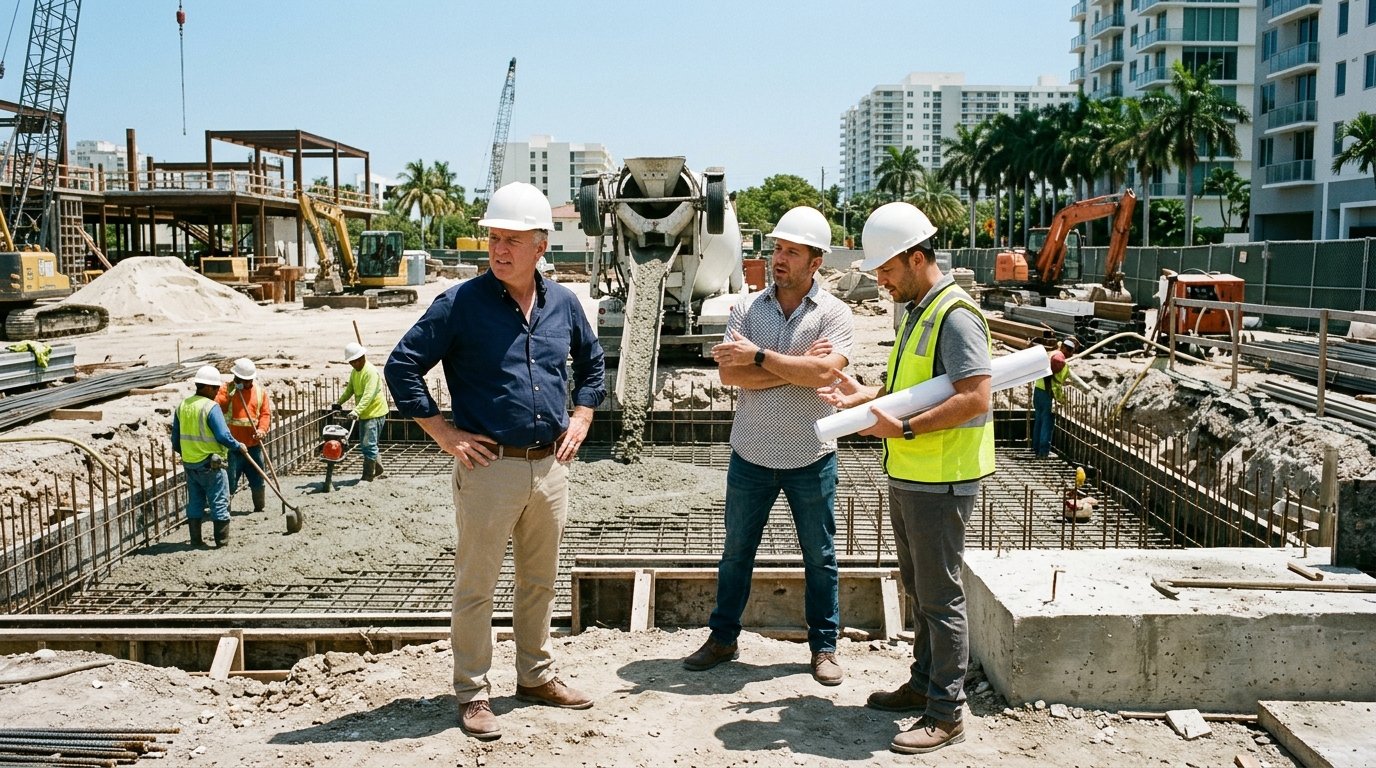
A surprising number of experienced developers enter a new project without fully defining who is responsible for what. The result is not always catastrophic — but it is almost always expensive. Overlapping authority, unclear decision chains, and missed coordination between design and construction phases are among the most common reasons South Florida projects run over budget or behind schedule. Getting clarity on these roles before the first shovel hits the ground is one of the highest-leverage decisions you can make.
According to the Associated General Contractors of America, project delivery method and team structure consistently rank among the top factors influencing construction outcomes. That insight holds especially true in a market as competitive and complex as South Florida, where permitting timelines, labor dynamics, and material supply chains each carry their own regional nuances.
Many developers assume their architect will handle construction oversight. Architects are responsible for design intent and periodic site observation — not day-to-day construction management. That gap is exactly where owner’s reps and construction managers earn their place on the team.
What an Owner’s Representative Actually Does

An owner’s rep works on your side of the table — full stop. Their job is to represent your interests across every phase of the project: pre-development, design, procurement, construction, and closeout. They do not typically manage the build directly. Instead, they help you make better decisions, faster, with fewer surprises.
In practical terms, an owner’s rep might help you evaluate general contractor bids, review contracts for unfavorable terms, track project milestones against your investment timeline, and act as a buffer between your development goals and the operational realities of construction. They are especially valuable when you, as the developer, are simultaneously managing multiple projects, investor relationships, or asset portfolios.
Think of them as a trusted advisor embedded in your project — someone who speaks construction fluently but is ultimately accountable to you, not the contractor.
What a Construction Manager Brings to the Table
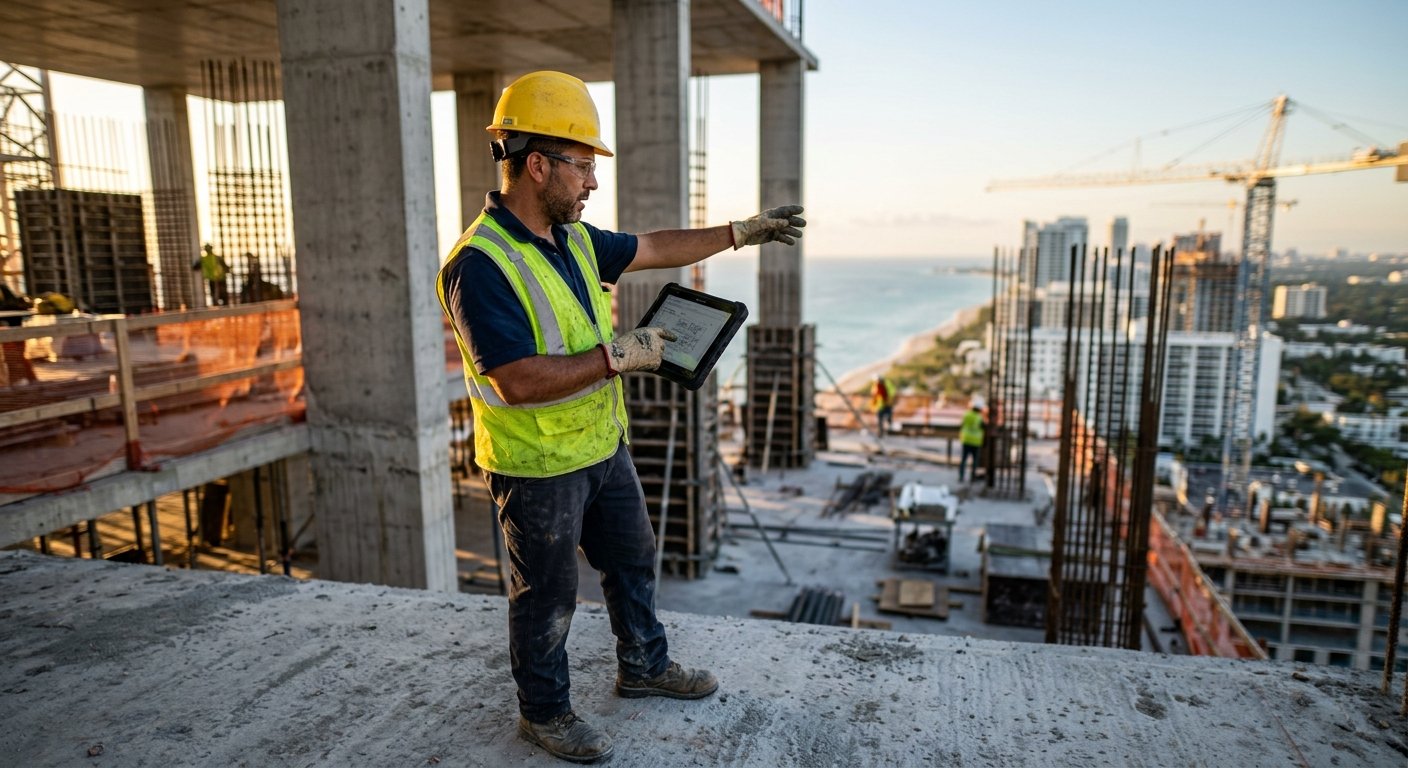
A construction manager (CM) operates at the execution layer. Where an owner’s rep is your strategic advocate, the CM is the operational quarterback. They coordinate subcontractors, manage schedules and budgets, oversee safety compliance, enforce quality standards, and troubleshoot field-level problems before they become expensive ones.
There are generally two delivery models to understand. In a Construction Manager at Risk (CMAR) arrangement, the CM assumes financial responsibility for delivering the project within a guaranteed maximum price. In an Agency CM arrangement, the CM acts as a consultant who manages the process without assuming construction risk. The Construction Management Association of America provides a detailed breakdown of these delivery models for developers evaluating their options.
| Criteria | Owner’s Representative | Construction Manager |
|---|---|---|
| Primary loyalty | The developer/owner | Project execution |
| Phase of involvement | Pre-development through closeout | Pre-construction through punch list |
| Day-to-day site role | Limited; oversight-focused | High; active field coordination |
| Contract management | Reviews and advises | Administers trade contracts |
| Risk assumption | None (advisory role) | Risk in CMAR; none in Agency CM |
| Best suited for | Developers with limited in-house capacity | Complex projects needing active coordination |
How South Florida Complexity Changes the Equation
Developing in Miami-Dade, Broward, or Palm Beach Counties adds layers of complexity that make strong project leadership especially critical. Local permitting processes vary by municipality, impact fee structures differ across the tri-county area, and workforce availability can shift quickly based on regional demand. These are not abstract challenges — they are real variables that affect your timeline and your bottom line.
When you work with a team that has deep roots in South Florida construction, you gain access to relationships and institutional knowledge that no out-of-market firm can replicate. Local subcontractor networks, familiarity with municipal inspectors, and an understanding of how the regional labor market moves — these are assets that translate directly into project performance.
In a market as layered as South Florida, who you know is often just as important as what you know.
At Ortega’s Building & Construction, we bring over 60 years of combined family legacy in South Florida construction to every project. That history is not a marketing line — it is the reason we can anticipate problems before they surface and navigate challenges that surprise less-experienced teams.
When You Need Both — and When One Role Is Enough
On smaller projects, a well-structured construction management agreement often covers everything a developer needs. But on larger, more complex developments — particularly ground-up multi-family or mixed-use projects with multiple stakeholders, phased timelines, or institutional financing requirements — having both roles filled provides an important checks-and-balances structure.
The key question is: how much internal bandwidth do you have? If you or your team can stay closely engaged throughout the project, a strong CM relationship may be all you need. If you are managing investor expectations, coordinating with architects, and running other assets simultaneously, an owner’s rep fills that oversight gap and ensures nothing falls through the cracks.
Assess your internal capacity
Honestly evaluate how much time your team can dedicate to active project oversight. The more limited your bandwidth, the stronger the case for both an owner’s rep and a CM.
Define project complexity
Large-scale multi-family, hospitality, or mixed-use developments with phased delivery or multiple stakeholders benefit from clearly defined roles across all project layers.
Evaluate your delivery model
Understand whether CMAR, Agency CM, or a combined general contractor/CM approach best fits your risk tolerance and financing structure.
Choose partners with local depth
In South Florida’s tri-county market, relationships, local permitting knowledge, and regional subcontractor networks are not optional — they are competitive advantages.
The Case for a Firm That Does Both Well
One emerging trend among South Florida developers is consolidating owner’s rep and construction management functions with a single trusted firm — particularly one that also serves as the general contractor. This integrated approach reduces friction between advisory and execution roles, shortens communication chains, and creates clear accountability.
It also requires choosing a partner with genuine depth across both functions. The wrong firm can create conflicts of interest or blind spots. The right one becomes a true extension of your development team — one that thinks like an owner and builds like a craftsman.
Our commercial construction management approach at Ortega’s is built on exactly that philosophy. We treat every project as if our own name is on the deed — because in a relationship-driven business, our reputation is inseparable from your outcome. That same stakeholder mentality shapes how we approach multi-family construction and hospitality construction across the region.
The U.S. Bureau of Labor Statistics notes that construction manager demand continues to grow as projects become more complex — a trend we see reflected every day in the South Florida development landscape.
When interviewing construction management consultants in Florida, ask directly: how do you handle conflicts between project schedule and quality? The answer reveals whether a firm thinks like a builder or like a business partner — and that difference matters for the life of your asset.
Frequently Asked Questions
Is an owner’s rep the same as a construction manager?
No. An owner’s rep advocates for the developer’s interests across all project phases and does not typically manage construction directly. A construction manager actively coordinates the build — schedules, subcontractors, quality, and budget. The two roles are complementary, not interchangeable.
Do I need both an owner’s rep and a construction manager?
It depends on your project’s complexity and your team’s internal capacity. On large multi-family or mixed-use developments with multiple stakeholders, both roles add significant value. On smaller projects where you can stay closely engaged, a strong construction management relationship may be sufficient.
What should I look for in a construction management firm in South Florida?
Prioritize local market knowledge, established subcontractor relationships, familiarity with tri-county permitting processes, and a track record in your project type. A firm that combines general contracting with construction management can simplify accountability and reduce communication gaps.
How does construction management differ between project types like multi-family and hospitality?
Each project type has distinct regulatory, design, and operational requirements. Hospitality projects involve brand standards, FF&E coordination, and guest-experience considerations. Multi-family projects demand careful phasing, unit-turn planning, and compliance with residential codes. A construction manager experienced in your specific project type is a meaningful advantage.
At what project stage should I bring in a construction manager?
Ideally, during pre-construction — before design is finalized. Early CM involvement allows for constructability reviews, value engineering, and realistic scheduling that saves time and cost downstream. Waiting until permits are issued is one of the most common and preventable mistakes in South Florida development.
Let’s Talk About Your Next Project
Whether you are in early planning or already deep in pre-construction, our team is ready to help you structure the right oversight model for your development goals across Miami-Dade, Broward, and Palm Beach Counties.
About Ortega's Building & Construction
Ortega's Building & Construction is a family-oriented general contractor and construction management firm serving South Florida developers, property owners, and architects. Specializing in multi-family residential, mixed-use, and hospitality projects across Miami-Dade, Broward, and Palm Beach Counties, Ortega's emphasizes relationship-building, long-term quality, and a stakeholder mentality. Locally owned and trusted in South Florida for more than 10 years, the company delivers on-time projects with personal attention, integrity, and a commitment to building communities that last for generations. Visit ortegagc.com →